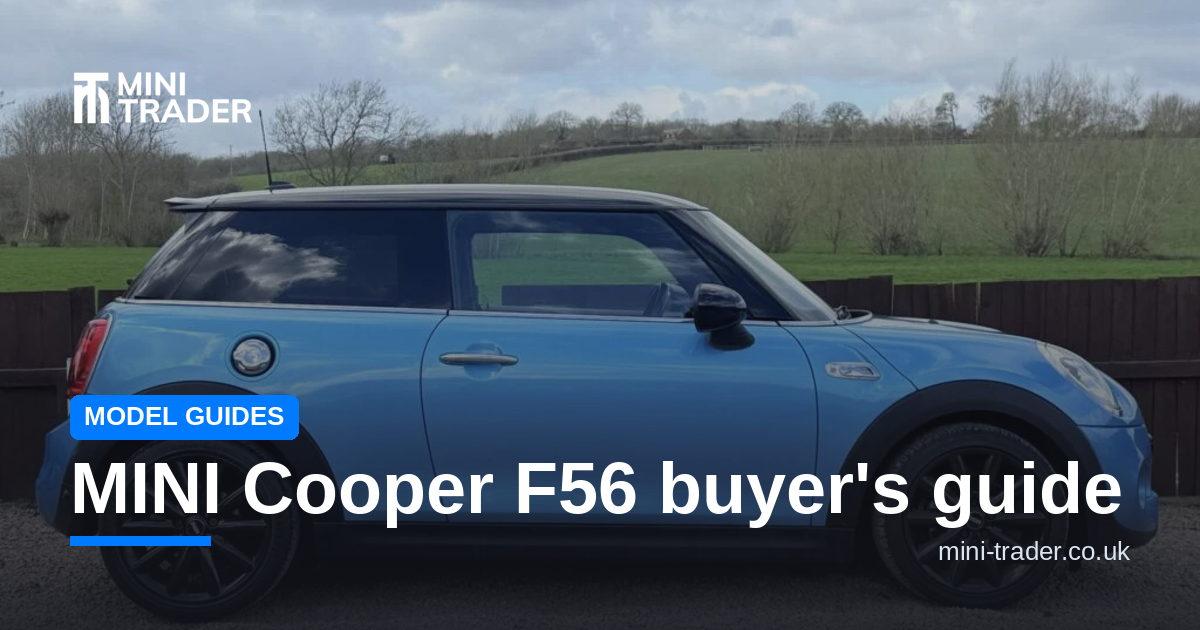
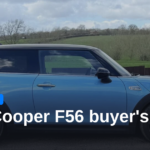
Short version: the F56 is the third-generation MINI hatch, on sale from March 2014, and it’s the one that swapped the old troublesome engines for BMW’s own turbo units. This MINI Cooper F56 buying guide is here to help you land a good one. As of August 2026, early Coopers start around £6,000, a tidy post-2018 Cooper S sits nearer £13,000 to £18,000, and the fastest GP is £30,000-plus. Buy on service history and a clean recall record, watch the early 2014 to 2015 cars for the crankshaft bearing issue, and you’ve got a genuinely modern MINI that’s cheap to run and still good fun.
What is the MINI Cooper (F56)?
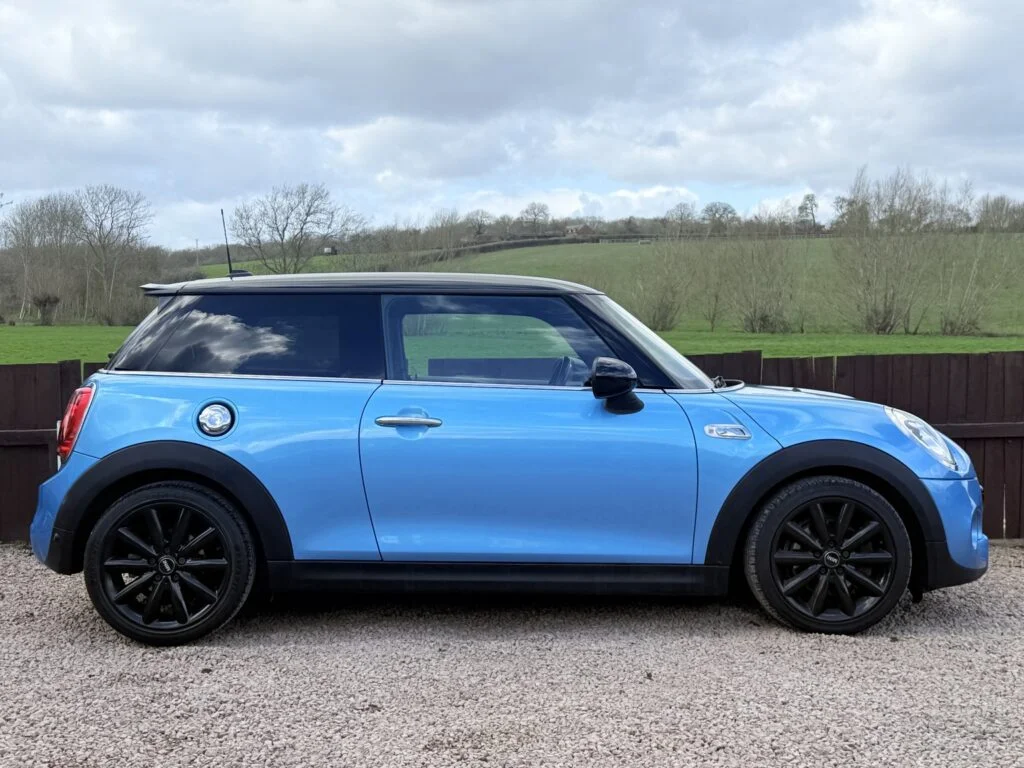
The F56 replaced the R56 in 2014 and it was a much bigger change than the styling suggests. Underneath sat an all-new UKL1 platform, stiffer and lighter, and a fresh family of BMW TwinPower turbo engines. That last point matters more than anything else here: these were the first MINIs to drop the old PSA-derived “Prince” engines that gave the R56 such a mixed reputation. The result is a car that drives with the usual MINI go-kart feel but feels a class up inside, with soft-touch plastics that wouldn’t shame a BMW.
It’s bigger than the MINIs that came before, longer and wider, with a 211-litre boot that’s up 61 litres on the R56. Rear space is still tight, so treat it as a roomy two-seater with occasional back seats rather than a family car. There were two facelifts to know about: the 2018 LCI update brought the circular halo daytime lights and Union Jack rear lights, and a second refresh in 2021 changed the bumpers, grille and trims again.
Engines and specs
The line-up is broad, from the frugal One up to the 306bhp GP. Here’s the shape of it.
Model
Engine
Power
0 to 62 mph
One
1.2 / 1.5 3-cyl petrol
102 bhp
Around 9.9 sec
Cooper
1.5 3-cyl petrol (B38)
136 bhp
7.9 sec
Cooper D
1.5 3-cyl diesel
116 bhp
Around 9.2 sec
Cooper S
2.0 4-cyl petrol (B48)
192 bhp
6.8 sec
Cooper SD
2.0 4-cyl diesel
170 bhp
7.3 sec
John Cooper Works
2.0 4-cyl petrol (B48)
208 to 231 bhp
6.1 sec
JCW GP (2020)
2.0 4-cyl petrol (B48)
306 bhp
5.2 sec
A word on which one to pick. The three-cylinder Cooper is the sweet spot for most buyers. It’s got a proper thrummy character to it and it’s quick enough for real roads. The Cooper S is the one to have if you want proper pace without JCW money. Diesels only really pay off if you cover big miles; for average use, the petrols are the easier buy. On gearboxes you get a six-speed manual or an automatic, and both are dependable. The manual clutch is strong, so a squeak on its own usually just needs adjustment rather than a new clutch.
What they’re worth now
The F56 has settled into sensible used money, and there’s plenty of choice, which keeps asking prices in check.
Budget (August 2026)
What you’ll typically find
£6,000 to £8,000
Earliest 2014 to 2015 Coopers and Ones, higher miles, entry Cooper S
£8,000 to £12,000
Lower-mileage 2015 to 2017 cars, earliest JCW, higher-mileage LCI
£12,000 to £16,000
Best-spec late 2017 to 2020 Coopers and Cooper S
£16,000 to £20,000
The best LCI Cooper S and JCW, first of the 2021 facelift cars
£20,000 to £30,000+
Nearly-new high-spec cars, and the collectible JCW GP
Prices as of August 2026, based on current UK asking prices across the used market and the bands set out in the Fast Car F56 buyer’s guide. Spec makes a real difference on these cars. A well-optioned example with a panoramic roof, leather and a desirable colour will sit at the top of its band, while a base One in white with no extras sits at the bottom. For the wider ownership picture across the range, our guide to what a MINI Cooper costs to buy and run puts the numbers side by side.
Common problems to check
The F56 is a big step up on reliability from the R56, but it isn’t faultless. Work through this list and you’ll know what you’re buying.
Crankshaft bearing (early cars). This is the big one. Cooper and Cooper S models built in 2014 and early 2015 were subject to a recall for a defective crank bearing. Some engines had the bearing replaced; others needed a full engine swap. Check the service file and the recall history, and if the paperwork isn’t clear on an early car, walk away or get it verified before you commit.
Wiring loom water damage (pre-2018). On earlier cars, water can track down from the washer hose or scuttle and soak the wiring loom, which throws up random electrical faults. Owners have reported bills of £2,000 to £3,000 for a full loom. Check for damp in the footwells and boot, and be wary of a car with electrical gremlins nobody can pin down.
Oil consumption and servicing. The hotter engines can use oil, so check the level and look for a car serviced more often than MINI’s official two-year schedule. Most owners advise an annual oil and filter change regardless, and the cars that got it tend to be the healthy ones. The Honest John owner reviews for the F56 make the same point again and again.
Engine mounts. The hydraulic mounts can fail with age, so listen for a knock or clonk on start-up and when you lift off the throttle. Not a huge bill, but worth spotting.
Suspension and wheels. Worn front control-arm bushes cause a knock over bumps. Check the alloys too, especially the bigger Cooper S and JCW rims, since kerbing is common and heavy damage can point to alignment trouble.
Small stuff. Isolated sat-nav niggles and a failed steering wheel horn push turn up now and then. The oldest cars are over ten years old now, so also check for misted headlights, faded plastics and rubbed paint around the door shuts.
What to check on a test drive and inspection
Start it from cold. That’s when engine mount knocks and any rough running show up before a seller has had a chance to warm it through. Let it idle, watch the temperature settle, and listen for anything odd from the top of the engine.
On the move, take the Cooper S or JCW past 3,000 rpm to feel the turbo come in cleanly, with no hesitation or warning lights. Feel for a clutch that bites in the middle of its travel and a gearbox that shifts without crunching. Check every electrical toy works, the sat-nav included, and press the horn. Then go through the paperwork: a consistent MOT record, a service file with proof of regular oil changes, and confirmation that any recalls were done. If you’re not confident judging an engine yourself, it’s money well spent to have a specialist look it over first; you can book a mechanic through Mini Trader for a proper pre-purchase inspection.
Running costs
For the performance on offer, the F56 is cheap to run. The three-cylinder Cooper is the frugal choice, with real-world economy in the high 40s to low 50s mpg, and the diesels do better still on a long run. The Cooper S sits in the 40s in normal use. Insurance is reasonable across most of the range: the One and Cooper sit around groups 11 to 16, the Cooper S nearer group 22, and the JCW climbs into the mid-30s. For the full picture, see our guide to MINI Cooper insurance groups and costs.
Road tax depends on registration date. Cars registered from April 2017 pay the flat standard rate, while earlier F56s fall under the older CO2 bands, and the cleanest early Coopers and diesels can be very cheap to tax. Servicing at a MINI specialist rather than a main dealer keeps costs down, and parts are easy to find. If you want to know how the F56 stacks up against older MINIs on dependability, our look at whether MINIs are reliable covers it by engine and generation.
Who it’s for, and who should look elsewhere
The F56 suits someone who wants a modern, well-built small car that’s still fun to drive and cheap to run, without the older MINI’s engine worries. Pick a Cooper for everyday use, or a Cooper S if you want more pace. The JCW is the one to go for if you want a proper hot hatch. If you specifically want the analogue, supercharged feel of the early cars, the R56 Cooper S guide is worth a read before you decide, since the older car has a different character. And if rear-seat space is a priority, a MINI hatch of any generation will feel tight; a Clubman or Countryman makes more sense there.
FAQs
Is the MINI F56 a reliable car?
Yes, largely. The F56’s BMW TwinPower engines are a clear improvement on the R56’s Prince units. The main thing to check is the crankshaft bearing recall on early 2014 to 2015 Cooper and Cooper S cars, plus the pre-2018 wiring loom water issue. A car with a full history and both sorted should be dependable.
Which MINI F56 engine is best?
For most buyers, the 136 bhp three-cylinder Cooper is the pick: characterful, quick enough and cheap to run. The Cooper S adds real pace for sensible money. Diesels make sense only if you do high mileage.
What years should I avoid on the F56?
Be cautious with 2014 and early 2015 Cooper and Cooper S cars unless the crankshaft bearing recall is clearly documented as done. Pre-2018 cars also carry the wiring loom water risk, so check for damp and electrical faults.
Is the MINI F56 expensive to insure?
Not for most versions. The One and Cooper sit around insurance groups 11 to 16, the Cooper S nearer group 22, and only the JCW climbs into the mid-30s. That makes the lower-powered cars an easy insure for younger drivers.
How much should I pay for a used MINI F56?
As of August 2026, early Coopers start around £6,000, low-mileage 2017 to 2020 cars run £12,000 to £16,000, and the best LCI and JCW cars reach £16,000 to £20,000. The collectible JCW GP starts around £30,000.
Does the MINI F56 have timing chain problems?
The B38 and B48 engines use a timing chain, and it isn’t a known weak point on the F56 the way the R56’s was. Regular oil changes are the best insurance, which is why a well-serviced car matters more than any single component.
Ready to find your F56?
If this MINI Cooper F56 buying guide has made up your mind, browse the current used MINI Cooper listings on Mini Trader. Every car is MINI, listed by owners and dealers who know the brand, and there are no transaction fees, so sellers keep 100% of the sale. Find a well-kept F56 with a clean history and you’ve got one of the smartest used small cars out there.
Short version: the R50 is the first BMW-era MINI, the One and the Cooper, on sale in the UK from July 2001 to 2006. This MINI Cooper R50 buying guide is he
Short version: the R53 is the supercharged first-generation MINI Cooper S, built from 2001 to 2006, and it's one of the last affordable modern classics wit
Top Ratings & Reviews! MINI Trader is your premier destination for buying and selling MINI cars, parts and accessories. Our mission is to connect buyers and sellers in a trusted and user-friendly marketplace tailored specifically to the MINI community.