Short version: the R53 is the supercharged first-generation MINI Cooper S, built from 2001 to 2006, and it’s one of the last affordable modern classics with real character. This MINI Cooper S R53 buying guide is here to help you land a good one. As of July 2026 usable cars start around £2,000 and clean, well-kept examples sit nearer £6,000 to £7,000. Buy on service history and the state of the supercharger, cooling system and power steering, not on price alone. Get that right and you’ve got a 163 to 170 bhp pocket rocket for pocket-money money.
What is the MINI Cooper S (R53)?
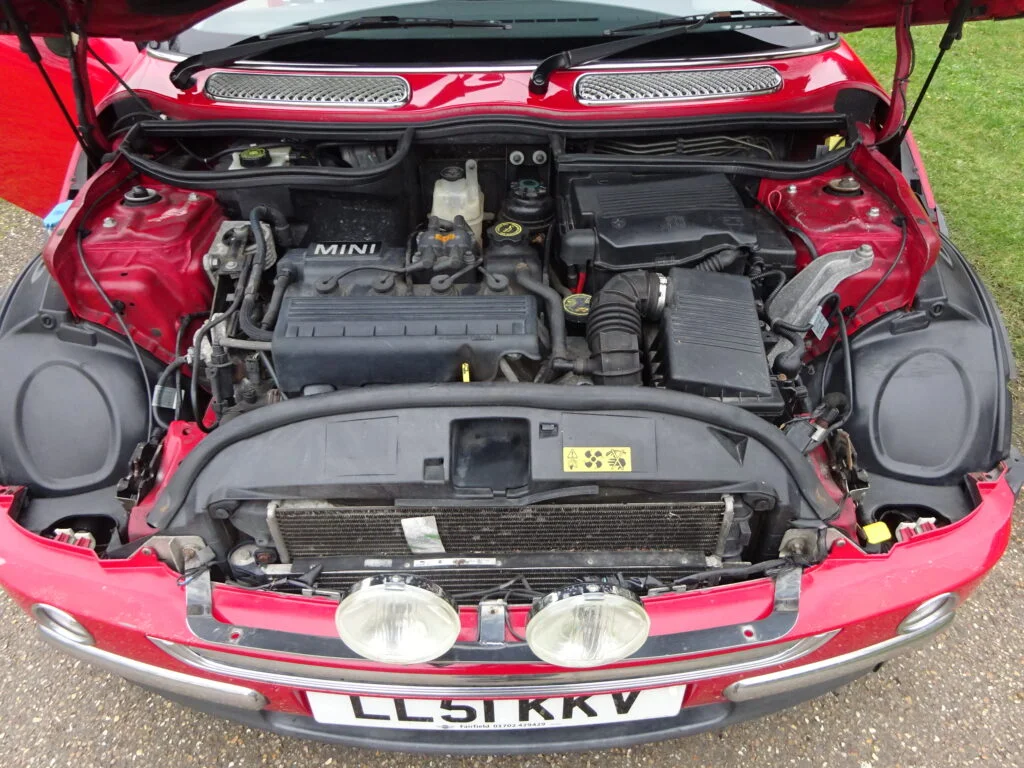
The R53 is the hot version of the first BMW-era MINI. It shares its shell with the ordinary R50 Cooper and One, but under the bonnet sits a 1.6-litre Tritec engine with an Eaton M45 supercharger bolted on top. That’s the bit that matters. Where later Cooper S models went turbocharged, the R53 blows through a belt-driven supercharger, so throttle response is instant and there’s a proper whine that owners either love or, well, love a bit more.
Early cars made 163 bhp. The 2004 facelift brought a smaller supercharger pulley and a better intercooler, nudging that to 170 bhp, along with a few cosmetic tweaks. There was a factory John Cooper Works kit taking it to around 210 bhp, and the 2006 JCW GP, a stripped-out limited run, is now a genuine collector’s car with prices to match.
Engines and specs
One engine, two power outputs, and a gearbox choice that’s easy to get right. Here’s the shape of it.
Spec
MINI Cooper S R53
Years
2001 to 2006 (facelift 2004)
Engine
1.6 Tritec, Eaton M45 supercharger
Power
163 bhp (pre-2004), 170 bhp (2004 on)
Gearbox
6-speed Getrag manual (CVT auto also offered)
0 to 60 mph
About 6.7 to 7.4 seconds
Top speed
Around 135 mph
A quick word on the gearbox. The manual is the one you want. It’s a six-speed Getrag, tough and long-lived, though the shift can feel notchy and slightly awkward, which is normal for this box rather than a sign of trouble. The CVT automatic was never popular, feels flat next to the manual and is weaker mechanically, so most buyers give it a miss.
What they’re worth now
The R53 has quietly turned into a modern classic, but it hasn’t gone silly yet. There are still plenty about, and that keeps the everyday cars sensible.
Budget (July 2026)
What you’ll typically find
£2,000 to £3,500
Higher-mileage or tired cars, patchy history, jobs pending
£3,500 to £5,500
Solid, genuine cars with a decent file and sensible miles
£5,500 to £7,000+
Tidy late 2005 to 2006 cars, low miles, full history
More again
Factory JCW and the 2006 JCW GP, now collectible
Prices as of July 2026, based on current UK asking prices across the used market. The pattern is simple: the cheap ones aren’t really cheap once you add the work they need, and a slightly dearer car with a fat service history is usually the better buy. A well-sorted R53 that already has its supercharger serviced and its cooling system refreshed can be worth paying up for.
Common problems to check
The R53 has a known list, and none of it is a secret. Work through these and you’ll know exactly what you’re buying.
Supercharger. The Eaton M45 is generally reliable, and the whine under load is meant to be there. The catch is the supercharger oil, which needs changing roughly every 60,000 to 80,000 miles but isn’t clearly flagged in the owner’s manual, so loads of owners never do it. A rattle at cold idle that clears once warm points to the snout coupler. On its own it’s a cheap fix, but it tells you servicing has been left, so budget for a rebuild if there’s no record. It matters because Eaton no longer makes these units new. Look for a stamp or invoice showing the supercharger has been looked after.
Cooling system. This is the one that bites. The plastic coolant expansion tank sits near the hot exhaust manifold, and years of heat cycling crack the seams. The thermostat and cooling fan can fail too, and if the car overheats it can crack the cylinder head, which is a proper bill. Check for a healthy coolant level, no mayo under the oil cap, and a fan that actually kicks in.
Power steering pump. The electro-hydraulic pump is one of the most replaced parts on these cars. There’s a separate cooling fan for it, and if that fan fails the pump overheats and the electronics shut it down as a failsafe. Turn the wheel lock to lock on the test drive and listen for a groan or a warning light.
Oil leaks. The crank seal and the crank sensor O-ring dry out and weep. Have a look under the car and at the back of the engine for oil, and factor it in if you find it.
Clutch and suspension. The clutch works hard in a car like this, so a heavy or slipping one on a Cooper S can mean a bill soon. Also check the anti-roll bar links, bushes and shocks for knocks and leaks, since these wear out with age and mileage. The documented R53 fault list on Fast Car is worth a read before you view one.
What to check on a test drive and inspection
Start it from cold if you can. That’s when the supercharger snout rattle and any cooling gremlins show up, and it’s also your chance to hear the engine before a seller has warmed it up to hide something. Let it idle, watch the temperature gauge climb and settle, and make sure the fan comes on rather than letting it creep.
On the move, take it past 3,000 rpm in a couple of gears so the supercharger is working, and listen for anything beyond the normal whine. Turn the steering fully both ways in a car park to load the power steering pump. Feel for a clutch that bites cleanly, a gearbox that goes in without crunching, and brakes that pull up straight.
Then go through the paperwork properly. You want a service file with cambelt and, ideally, supercharger service records, a run of MOTs that tells a consistent story, and no nasty advisories that keep coming back. If you’re not confident judging an engine yourself, it’s money well spent to have a specialist look it over first; you can book a mechanic through Mini Trader to give it a proper pre-purchase inspection.
Running costs
For a car this quick, the R53 is cheap to live with. Real-world fuel economy sits around 32 to 35 mpg, and it’ll happily take supermarket petrol. Insurance is reasonable too, with the Cooper S falling around group 16, so it won’t sting a careful driver (Parkers).
Because every R53 was registered before 2006, road tax is based on the old CO2 bands rather than the flat rate, so check the exact figure for the car you’re looking at. Servicing at a MINI specialist is far cheaper than a main dealer, and parts are easy to find. The costs that catch people out are the ones above: a supercharger rebuild, a cooling overhaul, a power steering pump or a clutch. A car that’s already had them done is often the cheaper car in the long run. For the wider ownership picture across the range, our guide to what a MINI Cooper costs to buy and run puts the numbers side by side.
Who it’s for, and who should look elsewhere
The R53 suits someone who wants an involving small car with a bit of history and doesn’t mind maintaining it properly. It’s analogue in the best way, all quick steering and that supercharger shove, with a go-kart feel the later turbo cars smoothed over. Buy a well-kept one and it’s a car you’ll want to keep.
Who should think twice? If you want fuss-free, hands-off motoring and the newest tech, a later MINI makes more sense. The turbocharged R56 Cooper S is roomier, more economical and more modern to drive, though it has its own quirks; our R56 Cooper S buyer checklist covers those. And if reliability across the whole MINI range is what’s on your mind, start with our look at whether MINIs are reliable.
FAQs
Is the MINI Cooper S R53 reliable?
Yes, with a caveat. The Tritec engine and Getrag gearbox are tough, but the R53 has known weak points in the cooling system, power steering pump and supercharger servicing. A car with a full history and those jobs already done is a dependable thing; a neglected one can get expensive.
How much is a MINI Cooper S R53 in 2026?
As of July 2026, usable cars start around £2,000, with solid examples between £3,500 and £5,500 and the best late low-mileage cars nearer £7,000. Factory JCW models and the 2006 JCW GP sit higher again as collector cars.
What’s the difference between 163 and 170 bhp R53?
The 163 bhp cars are pre-2004. The 2004 facelift added a smaller supercharger pulley and an improved intercooler to lift output to 170 bhp, plus minor styling changes. Both drive much the same; buy on condition and history rather than the extra 7 bhp.
Does the R53 supercharger need servicing?
Yes. The supercharger oil should be changed roughly every 60,000 to 80,000 miles, but it isn’t obvious in the manual so it’s often skipped. A cold-start rattle usually means the snout coupler, which signals the service has been left. Ask for evidence it’s been done.
Should I buy an R53 or an R56 Cooper S?
The R53 is the supercharged, more characterful early car; the R56 is the turbocharged, more refined and economical follow-up. Pick the R53 for feel and modern-classic appeal, the R56 for everyday usability. Whichever way you lean, buy the best-kept example you can, not the cheapest.
Is the automatic R53 any good?
The CVT automatic was never well liked and is mechanically weaker than the manual. Most enthusiasts avoid it. If you can drive a manual, the six-speed Getrag is the one to have.
Find your MINI Cooper S R53
A good R53 is out there, and it’s worth waiting for the right one. Browse the current used MINI Cooper listings on Mini Trader, a marketplace built for MINIs and the people who love them, with no seller fees and a community that gets the brand. When you find one you like, get it inspected, check the history, and buy on condition rather than price. Do that and you’ll have an R53 worth keeping.
Short version: the R50 is the first BMW-era MINI, the One and the Cooper, on sale in the UK from July 2001 to 2006. This MINI Cooper R50 buying guide is he
Short version: the F56 is the third-generation MINI hatch, on sale from March 2014, and it's the one that swapped the old troublesome engines for BMW's own
Top Ratings & Reviews! MINI Trader is your premier destination for buying and selling MINI cars, parts and accessories. Our mission is to connect buyers and sellers in a trusted and user-friendly marketplace tailored specifically to the MINI community.