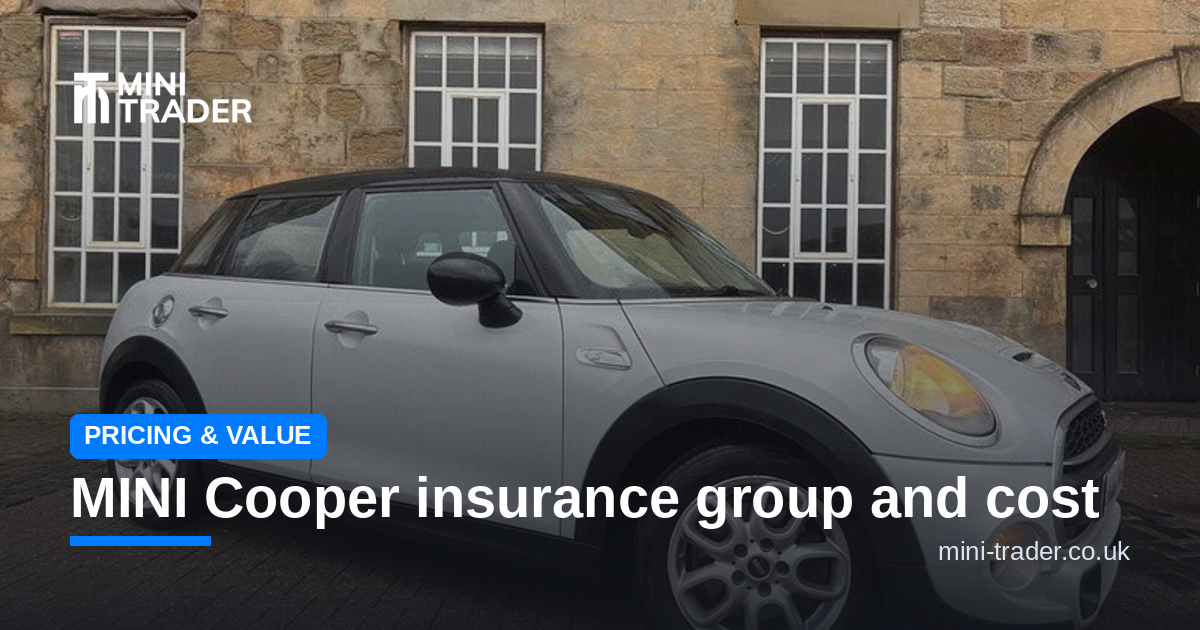
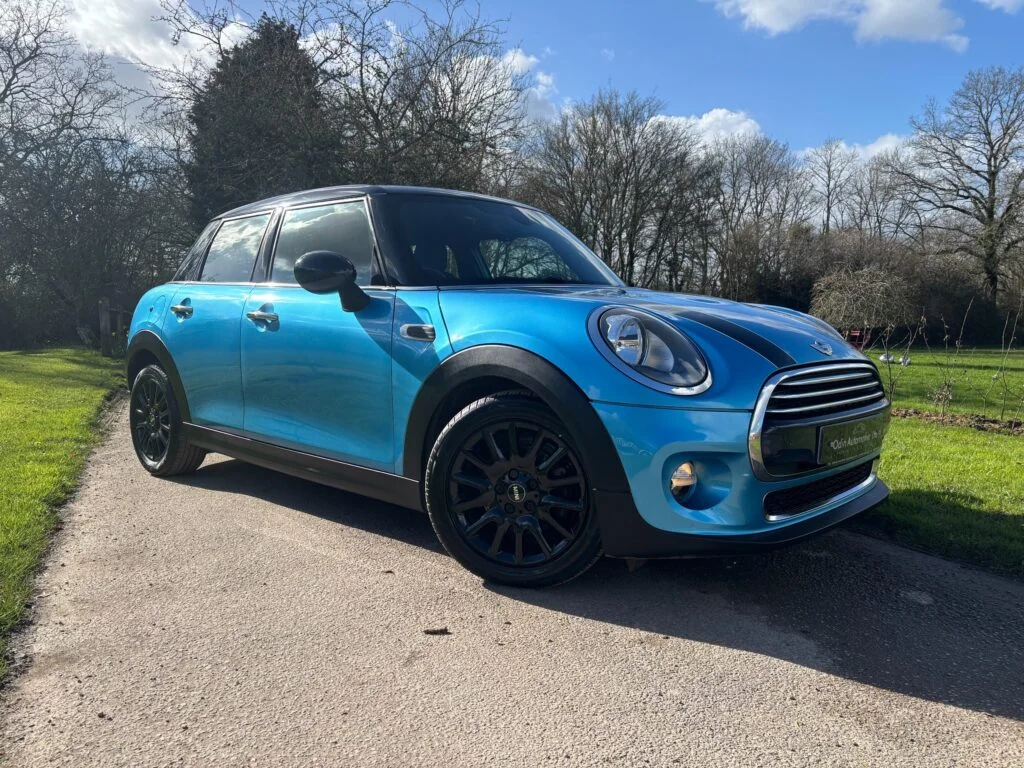
Most MINI Coopers sit somewhere between insurance group 11 and group 30 on the 1 to 50 scale. A MINI One lands near the bottom, a 1.5 Cooper sits around group 18 to 19, and a Cooper S climbs to roughly 25 to 30. The hot John Cooper Works cars go higher again, into the mid-30s. So the badge on the boot has a real effect on what you pay, and picking the right one saves you money every year you own it.
Here’s the practical version, model by model, with real 2026 UK numbers and a few things you can actually do to bring the premium down.
What insurance group is a MINI Cooper?
Insurance groups run from 1 to 50. Group 1 cars are the cheapest to cover; group 50 the dearest. The rating comes from Thatcham Research and the Association of British Insurers, and it’s based on things like repair cost, performance, the price of parts, and how well the car resists theft. A MINI’s group depends on the exact model, engine and year, so treat these as ranges rather than a single fixed number.
The pattern holds across the older generations too. The supercharged R53 Cooper S from the early 2000s sits around group 30, and its JCW versions push to 32 to 34. Age of the car doesn’t drag the group down the way you might hope; a fast MINI stays a fast MINI as far as the rating is concerned.
Why the Cooper S costs so much more to insure
The jump from a Cooper to a Cooper S isn’t small. You’re going from about group 18 up to the high 20s, and that’s the 2.0-litre turbo doing the talking. More power means more risk in the insurer’s eyes, plus pricier parts and brakes. If you’re weighing up the two, it’s worth reading through the difference between the One, Cooper and Cooper S before you commit, because the insurance gap runs for the whole time you own the car, not just year one.
What a MINI Cooper actually costs to insure in 2026
Groups tell you the relative cost. Here’s the real money. As of 2026, the average MINI Cooper premium sits around £841 a year for a typical UK driver on a comprehensive policy. Step up to a Cooper S and the average is closer to £1,028.
That’s the middle of the road, though. Your own quote swings a long way either side of it:
Driver
Car
Rough annual premium
Settled driver, 50+, no claims
1.5 Cooper
From about £540
Average driver, mid-30s
1.5 Cooper
Around £841
New driver, 17
John Cooper Works
£4,600+
Look at the gap between the top and bottom rows. It’s the same sort of car in two of them, and the premium more than doubles once you change the driver. Age, postcode, annual mileage and no-claims history move the number far more than the MINI badge does. A 17-year-old on a JCW is about as dear as it gets; a settled driver on a plain Cooper sits near the cheap end.
What drives your premium up or down
The car is only part of it. The rest is you and where you keep it.
Your age and experience matter most, which is why a young driver’s quote can be five or six times an older driver’s on the same car. Postcode comes next: a MINI parked overnight in a busy city with high theft rates costs more than one on a quiet driveway. Then there’s annual mileage (fewer miles, lower risk), your no-claims discount, and whether you’ve got a clean licence. Modifications count too. A remapped or lowered MINI can bump you up a bracket or knock you out of the cheaper policies altogether.
How to pay less for MINI Cooper insurance
A few practical moves actually shift the number:
Pick a lower-group MINI in the first place. If a 1.5 Cooper does what you need, you’ll pay less than you would on a Cooper S every single year. Pay annually if you can, since monthly instalments carry interest. Build and protect your no-claims discount, because it’s one of the biggest levers you’ve got. Add a named experienced driver to a young driver’s policy where it’s genuine, and stick to a realistic mileage figure rather than guessing high. Keeping the car on a driveway or in a garage overnight helps as well. And always shop around at renewal; loyalty rarely pays with car insurance.
It’s also worth factoring insurance into the bigger picture before you buy. Our guide to what a MINI Cooper costs to buy and run puts the premium alongside fuel, tax and servicing, and if you’re worried about running costs generally, how reliable MINIs are is worth a read too.
MINI Cooper insurance groups: FAQs
What insurance group is a MINI Cooper?
A standard 1.5 MINI Cooper is usually insurance group 18 to 19. The cheaper MINI One drops to group 11 to 13, while the Cooper S rises to about 25 to 30 and the John Cooper Works sits in the mid-30s. Exact groups vary by year and trim.
Is a MINI Cooper expensive to insure?
Not especially. At an average of around £841 a year in 2026, a MINI Cooper is roughly middle of the pack for a small hatchback. The One and Cooper are cheap to cover; the Cooper S and JCW cost noticeably more because of their performance.
Are MINIs cheap to insure for young drivers?
The MINI One and 1.5 Cooper are among the more affordable MINIs for new drivers thanks to their low groups, but any car is dear to insure at 17 or 18. Avoid the Cooper S and JCW as a first MINI; the groups and premiums are much higher.
Does the MINI Cooper S cost a lot more to insure than a Cooper?
Yes. The Cooper S usually sits several groups above the standard Cooper, so expect the premium to be a fair bit higher, often a few hundred pounds a year more. The 2.0-litre turbo engine and stronger performance are the reason.
Do modifications affect MINI insurance?
They can, and often not in your favour. Remaps, suspension changes, non-standard wheels and body kits can push you into a higher group or limit which insurers will cover you. Always declare modifications; not declaring them can invalidate the policy.
Thinking about your next MINI?
Insurance is one line on the running-cost sheet, and picking the right model keeps it in check. If you’re shopping, browse used MINI Coopers for sale on Mini Trader, where every listing is a MINI and nothing else. Ready to move yours on instead? You can list your MINI and keep 100% of the sale, with no seller fees.
So how much is a MINI Cooper? As of June 2026, a used one runs from about £4,800 for a higher-mileage early car to roughly £27,500 for a nearly-new example
Top Ratings & Reviews! MINI Trader is your premier destination for buying and selling MINI cars, parts and accessories. Our mission is to connect buyers and sellers in a trusted and user-friendly marketplace tailored specifically to the MINI community.