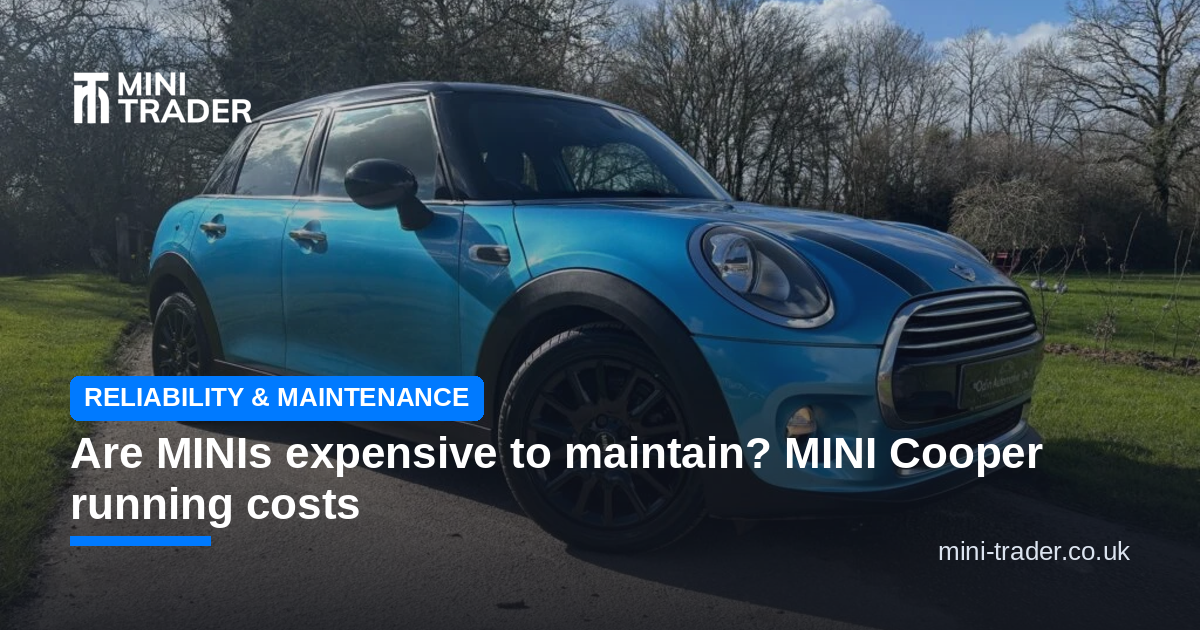
Short answer: no, not really. MINI Cooper running costs sit a bit above a bargain supermini but well below a premium German saloon, and most of the bills are the ordinary stuff any car needs. A routine service at a good independent starts around £150. Road tax on a newer one is £200 a year, fuel is the biggest line by far, and the pricey jobs (a clutch, a timing chain) only come round occasionally on a well-kept car. Buy a MINI with proof it’s been looked after and you’ll spend far less keeping it going.
Here’s where the money actually goes, with real 2026 UK figures, so you can budget properly before you buy.
Are MINIs actually expensive to run?
A MINI is a premium small car built on BMW mechanicals, so a few things cost a touch more than they would on a Fiesta. Servicing at a main dealer isn’t cheap, and genuine parts carry a badge premium. That’s the reputation the “MINIs are expensive” line comes from.
In practice, though, most owners don’t pay dealer money. Parts are everywhere, a decent independent MINI specialist knows these cars inside out, and the routine servicing is straightforward. The cars that cost people a fortune are almost always the neglected ones, bought cheap with no history, where a skipped service or an ignored rattle turns into a big bill later. Look after a MINI and the running costs stay low; the expensive stories nearly always start with a car that wasn’t.
MINI Cooper servicing costs
Servicing is the cost you can plan for, and it’s the one where choosing your garage makes the biggest difference.
A basic oil and filter service at an independent MINI specialist runs from about £150. The same job at a main dealer is more like £280 to £300, and they’ll add roughly £80 to £90 if the brake fluid is due. One owner recently compared a like-for-like quote and paid £150 at an independent against £345 at the dealer for identical work, using MINI parts either way. That gap is typical.
Modern MINIs run condition-based servicing, so the car tells you what’s due rather than working to a fixed mileage. An oil service and a larger inspection service alternate, with the bigger one costing more because it covers filters, plugs and a proper check-over. If you’re buying new or nearly new, a MINI service plan lets you pay monthly and can save around £300 over paying visit by visit. On an older car out of any plan, a trusted independent is almost always the sensible call. The specialists publish their fixed-price MINI servicing costs up front, so there are no surprises.
The bigger repair bills to plan for
These are the jobs that make people nervous. They don’t come round often, and on a cared-for car most owners never see the worst of them, but you should know the numbers.
Clutch. On a manual Cooper S, a clutch runs about £400 to £700 at a specialist. A main dealer can quote closer to £2,000 once a dual-mass flywheel goes in with it, which is why so many owners use an independent for this one. A high, vague bite point or any slip under load is the warning sign.
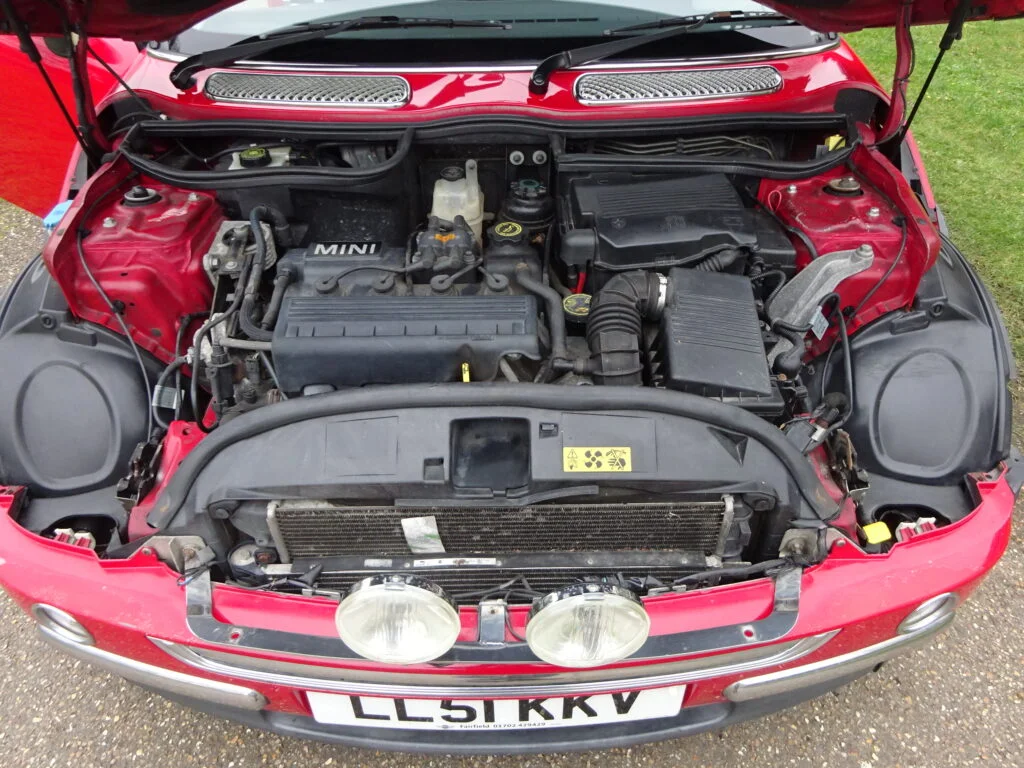
Timing chain. This mainly affects the early 2007-2010 “N14” turbo engines, which can stretch a chain and rattle on cold start. Sorting it at a specialist starts around £685 including VAT, sometimes a little less bundled with a service. The later N18 engine from the 2010 facelift largely fixed the problem, so it’s really an older-car check rather than a running cost.
Water pump and thermostat. Both can weep as a MINI ages, usually past 50,000 miles. A water pump averages around £262 fitted. Watch for coolant loss and a temperature needle that climbs.
Brakes and tyres. Front pads come in around £42 to £112, rears a little less; discs and pads together are roughly £210 to £380 per axle. Tyres are about £90 a corner for 16-inch rubber from an independent, nearer £110 for a branded runflat at a dealer. Nothing unusual for the class.
Job
Rough UK cost (July 2026)
Oil & filter service (independent)
From ~£150
Oil & filter service (main dealer)
~£280-£300
Clutch (Cooper S, specialist)
~£400-£700
Timing chain (early N14)
From ~£685
Water pump
~£262
Brakes (discs & pads, per axle)
~£210-£380
Tyres (each)
~£90-£110
<p style=”font-size:0.9em;color:#555″>Indicative independent-garage prices, July 2026. Main dealer rates run higher.</p>
Fuel, tax and insurance
Day to day, these three are what you’ll actually feel, and fuel is the big one.
A petrol MINI Cooper returns roughly 41 to 48 mpg on the combined cycle, so at average mileage you’re looking at somewhere around £1,300 a year in petrol. The plain Cooper is the thrifty pick; the Cooper S and JCW trade some economy for pace, so factor a bit more if you want the quick one.
Road tax is simple on newer cars. A MINI registered after April 2017 sits on the flat standard rate, which is £200 a year from April 2026 under the current vehicle tax rates on gov.uk. Older cars are taxed on CO2, and most petrol MINIs land in the low-to-middle bands.
Insurance is reasonable for a car this fun to drive. A standard Cooper sits around groups 15 to 20 of 50, a Cooper S nearer 20 to 30, and a JCW higher again at 25 to 35. For a young driver the S and JCW are the ones that push premiums up, so if you’re insuring a first car the base Cooper is the smart money. Our guide to how much a MINI Cooper costs to buy and run breaks the full ownership picture down further.
How to keep MINI running costs down
A few habits keep a MINI cheap over the years you own it.
Use a good independent MINI specialist once the car’s out of warranty; you’ll pay a fraction of dealer prices for the same work. Keep on top of servicing rather than stretching intervals, because a fresh oil change is a lot cheaper than the engine wear a skipped one causes. Before you buy, get the service history out and check the big jobs have been done, then run the reg through the free MOT history on gov.uk for repeat advisories. If you can’t judge the mechanical side yourself, book a mechanic for a pre-purchase inspection; it’s cheap next to buying a car that needs a clutch. And on an older, higher-value car, it’s worth weighing up whether an extended warranty on a MINI Cooper makes sense for the peace of mind.
Most of it comes down to buying a well-kept car in the first place. That single decision saves you more than any garage choice you’ll make afterwards.
FAQs
Are MINIs expensive to maintain?
Not especially. A routine service at an independent MINI specialist starts around £150, parts are widely available, and most repairs cost similar to other small cars. The big-ticket jobs like a clutch or an early timing chain come round rarely on a well-kept car. Dealer servicing is where costs climb, so most owners use a specialist.
How much does it cost to service a MINI Cooper?
An oil and filter service runs from about £150 at an independent and £280 to £300 at a main dealer, as of 2026. The larger inspection or major service costs more because it includes extra filters, plugs and checks. A MINI service plan can save around £300 if you’re buying new or nearly new.
How much is a clutch on a MINI Cooper?
Budget roughly £400 to £700 for a manual Cooper S clutch at an independent specialist. A main dealer can charge up to about £2,000 once a dual-mass flywheel is replaced at the same time. A slipping or high, vague bite point means it’s on the way out.
How much is road tax on a MINI Cooper?
A MINI registered after April 2017 pays the flat standard rate of £200 a year from April 2026. Older cars are taxed on CO2 emissions, and most petrol MINIs sit in the lower-to-middle bands, so tax stays modest either way.
Is a MINI Cooper cheap to run?
For a premium small car, yes. Fuel is the biggest cost at around £1,300 a year for average mileage, with £200 road tax and reasonable insurance on the standard Cooper. Service it sensibly at an independent and a MINI is genuinely affordable to own.
Are Cooper S and JCW models more expensive to run?
A little. They use more fuel, sit in higher insurance groups, and work their clutches and brakes harder if driven the way they’re meant to be. The running costs aren’t dramatically higher, but a young or first-time driver will notice the insurance gap most.
Looking for a MINI that won’t cost you a fortune?
The cheapest MINI to run is a well-kept one with a full history behind it. Browse the latest used MINI Cooper cars for sale on Mini Trader, and if you’re still weighing up which to trust, our straight look at MINI reliability is a good next read.
So, are MINIs reliable? Mostly, yes. They've got a solid reputation, parts are cheap and easy to get, and plenty of owners run them for years with very lit
Top Ratings & Reviews! MINI Trader is your premier destination for buying and selling MINI cars, parts and accessories. Our mission is to connect buyers and sellers in a trusted and user-friendly marketplace tailored specifically to the MINI community.