So, are MINIs reliable? Mostly, yes. They’ve got a solid reputation, parts are cheap and easy to get, and plenty of owners run them for years with very little drama. The real answer, though, is “it depends on the model and engine”. A few generations have well-known weak points, and a neglected example of any car will bite you. Buy the right MINI with proof it’s been looked after and you’ve got a dependable, cheap-to-run little car. Here’s how it actually stacks up, and which used MINIs to trust.
How reliable are MINIs, really?
As a brand, MINI sits in respectable territory. Owner reviews and UK road-tester surveys generally rate the MINI Hatch well for dependability, and cinch’s reliability guide says the same: most owners report few problems, build quality feels solid, and parts are widely available and sensibly priced. New MINIs come with a three-year warranty too, which tells you the maker backs them.
There’s a “but”. MINI is a premium small car on BMW underpinnings, so servicing and some parts cost a bit more than a bargain-basement supermini, and a couple of older engines and gearboxes carry real reputations. Reliability here is less about the badge and more about picking the right version and a well-kept example.
The common problems, by area
Most MINI trouble clusters around a few known items. None of them should scare you off; they just tell you what to check and which cars to be fussy about.
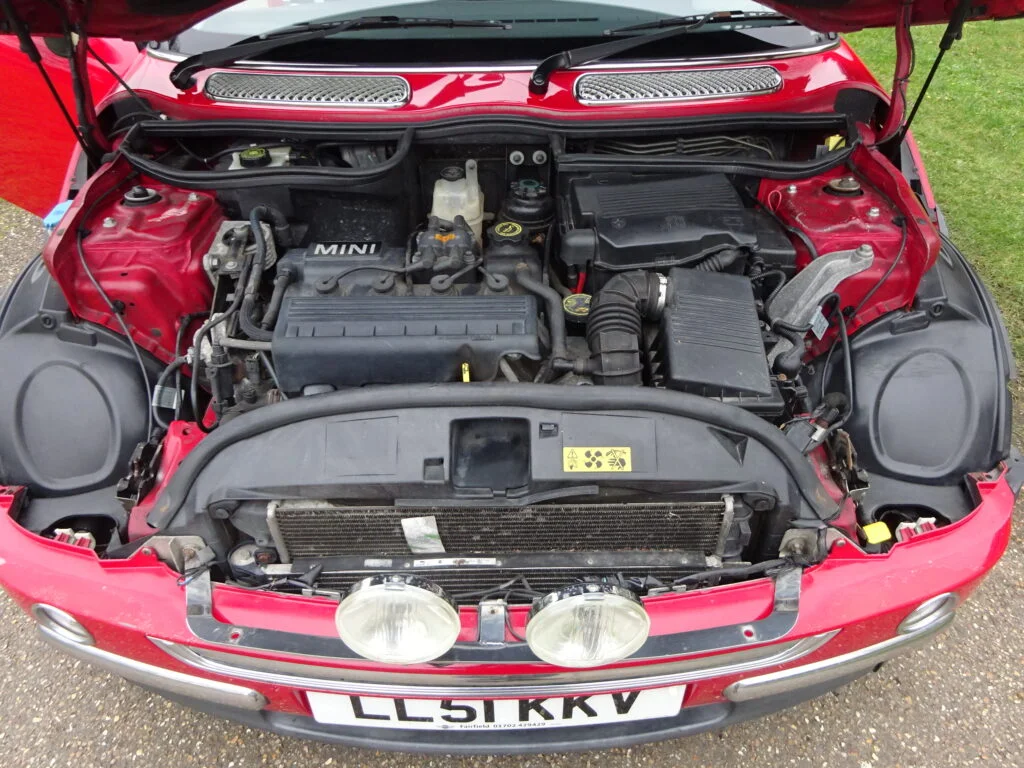
Timing chain on the early “N14” engine (2007-2010). The pre-facelift Cooper and Cooper S used the N14, which can suffer a rattling, stretched timing chain. Leave it and it can do serious engine damage. The revised N18 from the 2010 facelift is much better. On an early R56, this is the single biggest thing to listen for.
The early automatic (CVT) gearbox (2001-2006). Early R50 Coopers fitted with the CVT auto have a poor durability record; the belt-and-pulley setup struggles with heat and can fail expensively, as owner communities like North American Motoring document in detail. Manual cars of this era dodge the issue entirely.
Carbon build-up. The turbo petrol engines are direct injection, so carbon collects on the intake valves over time and makes them run rough. It’s a periodic clean (walnut blasting), more a service job than a fault.
Water pump and thermostat. Both can leak as the car ages, usually past about 50,000 miles. Watch for coolant loss and a temperature gauge that creeps up.
Clutch wear on harder-driven cars. The sportier Cooper S and JCW work their clutches hard, especially if the last owner enjoyed themselves. A bite point right at the top of the pedal, or any slip under load, means it’s on the way out.
Which used MINIs are the safer buys?
If you want the least hassle, a few clear patterns help.
Safer bets
Be more careful with
Post-2010 cars with the N18 engine
Early 2007-2010 N14 cars with no timing chain history
Manual gearbox, or the later torque-converter autos
Early 2001-2006 CVT automatics
Full service history and recent big-ticket work done
Cheapest car on the forecourt with patchy paperwork
Whatever the model, a MINI with a complete service record and proof of the expensive jobs beats a cheaper one with nothing to show. History wins over a low price every time.
Servicing and running costs
Running a MINI is not as dear as people expect. Parts are easy to find, a good independent MINI specialist will service one for far less than a main dealer, and any decent garage knows the routine jobs. Budget a little more than a basic supermini, plan for the known items above on older cars, and a MINI is cheap to keep on the road. For the actual servicing, clutch and repair figures, see our guide to whether MINIs are expensive to maintain.
How to buy a reliable one
Start the car from cold and listen for any rattle in the first few seconds (your timing chain check on older cars).
Get the full service history out and look for proof of timing chain, water pump or clutch work where relevant.
On early cars, prefer a manual, or confirm which automatic is fitted.
Run the registration through the free MOT history checker on gov.uk for advisories and repeat faults.
Broadly, yes. Most MINIs are dependable and cheap to run, with good parts availability. The main exceptions are the early N14 engine (2007-2010) for timing chains and the early CVT automatic (2001-2006). Pick a well-kept later car and reliability is genuinely good.
Which MINI engine is the most reliable?
The N18 turbo petrol, fitted from the 2010 facelift onward, is the safer used choice. It fixed many of the earlier N14’s weak points, including the timing system.
Are MINIs expensive to maintain?
Less than people think. Parts are widely available and sensibly priced, and an independent MINI specialist costs far less than a dealer. Expect a bit more than a budget supermini, but nothing alarming for a well-kept car.
What is the most reliable used MINI to buy?
A post-2010 MINI Cooper or Cooper S with the N18 engine, a manual gearbox or later automatic, and a full service history. That combination avoids the best-known trouble spots.
Do MINIs break down a lot?
No. Owner surveys generally report few breakdowns across ownership. Most issues are the known, checkable items above rather than random failures, which is exactly why a pre-purchase inspection pays off.
Are old MINIs reliable?
The classic original Mini and the older R-series MINIs can be reliable if cared for, but they need more attention than a modern car. On the older modern MINIs, avoid the early CVT automatic and check timing chains on N14 engines.
Short answer: no, not really. MINI Cooper running costs sit a bit above a bargain supermini but well below a premium German saloon, and most of the bills a
Top Ratings & Reviews! MINI Trader is your premier destination for buying and selling MINI cars, parts and accessories. Our mission is to connect buyers and sellers in a trusted and user-friendly marketplace tailored specifically to the MINI community.